Humble
The Subtle Art of Emptying Yourself

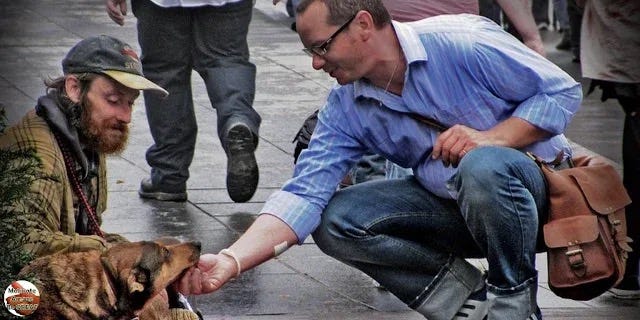
“Let each of you look not only to his own interests, but also to the interests of others.”
— Philippians 2:4 ESV
Growing up, humble wasn’t a word I heard too often, and it most certainly wasn’t a word that showed up in my vocabulary.
Funny how a word’s interpretation can shape us, one way or another. For a long time, I thought being humble just meant being polite to others. To say the least, that wasn’t even close.
When I became a believer, I started getting curious about what it actually means.
Why?
Because wherever Jesus is mentioned, the word humble follows. If I was going to be a disciple of His, I needed a full understanding of what I was signing up for.
The Meaning
Humble means to lower yourself.
That’s it. That’s the definition. And before you flinch, this is not weakness. It is strength.
For years, I believed humble was passive. Timid. Something you said when you didn’t want to take up too much space. But I’ve come to understand it as the very essence of love and servant leadership.
What Humble Is Not
Humble is not thinking less of yourself, it’s thinking of yourself less.
There’s a world of difference between those two things. One is self-deprecation. The other is self-forgetfulness. One shrinks you. The other frees you.
Humble is not a lack of confidence, it’s knowing your strength and choosing not to impose it.
The humble person doesn’t walk into a room unsure of themselves. They walk in sure enough that they don’t need the room to confirm it. That security is what makes real service possible.
Humble is not arrogance wearing a polite face, it seeks understanding.
Arrogance has already decided. Humility stays curious. It asks questions not to appear interested, but because it genuinely is.
Humble is not easily offended.
The humble person isn’t building a case for themselves. They’re not collecting grievances or keeping score. When you know who you are, a slight doesn’t have the same address to land.
Humble is not prideful.
Pride is a closed fist. Humility is an open hand. Pride guards what it has. Humility gives what it holds. You simply cannot serve from a clenched posture.
My Humility Didn’t Come in a Moment
It came in a series of occurrences.
I’ll be honest with you, I carried a harsh judgment toward the homeless community for a long time. I believed, somewhere in the back of my mind, that it was a choice. That they had chosen that life. And that judgment sat in me quietly, shaping how I saw people without me even realizing it.
Then I asked the Lord to search my heart.
What followed wasn’t a single revelation. It was a series of encounters — alleys, street corners, park benches, behind dumpsters. Face to face with brothers and sisters whose stories I had never taken the time to know. And one by one, those stories broke something open in me.
Because they weren’t simple stories. They were heartbreaking ones. Ones that made it clear, this path found them. Addiction, trauma, loss, abandonment. Nobody dreams of a park bench.
I learned something in those moments that I carry with me still: understanding is the antidote to judgment.
That truth humbled me in a way no sermon ever could. It emptied me of something I didn’t even know I was full of. And it freed me to serve, not from above, not with pity, but shoulder to shoulder, eye to eye.
Not making myself bigger than the person in front of me.
That’s what humility actually produces. Not just a posture. A perspective.
What Humble Actually Means
Humble means to empty yourself.
It means I don’t make myself bigger than the person in front of me. It means I don’t let my ego diminish the identity of someone else. It means I can walk into a moment fully, and still make that moment about you.
Think about what becomes possible when you operate from that place.
The person who is truly humble can be vulnerable and transparent.
When we guard ourselves, when we can’t share, can’t admit, can’t let people in, we’re making it about us. We’re protecting an image. And an image is just a wall with good lighting.
Humility unlocks the door to vulnerability. It’s what allows walls to become bridges.
And bridges are how people get to each other.
Trust gets built. People feel seen. And when people feel seen, they move, toward healing, toward growth, toward their own becoming.
Imagine how far you could go serving others from that state.
The Standard
Jesus didn’t just teach humility. He demonstrated it, all the way to a cross.
The Creator of the universe washed feet. He touched lepers. He stopped for one when crowds pressed in from every side. He made Himself low, not because He was weak, but because love always moves toward the other.
That’s the standard. Not politeness. Not passivity. A posture of the heart that says: you matter more than my comfort, my reputation, my need to be right.
So here’s the question worth sitting with today:
Who in your life needs you to lower yourself a little so they can rise?
That’s not a small ask. But it’s the ask that changes everything.
Go be the one who stoops. The world has enough people reaching for the top.
Know that you are loved and have a purpose!!